Installation
This Is Not Art
2010
Documentation only
The installation no longer stands. What follows is the surviving record, which is the work rather than a picture of it. Where individual pieces survive, the article says so.
This body of work exists because a professor threatened to fail me.
The refusal
Partway through the MFA I stopped bringing work to critique. Not out of laziness. I had decided there was no point, because the conversation in the room had come loose from the thing on the wall. The object was a launch point and nothing more, and once it had launched the discussion, the discussion went wherever contemporary art and contemporary life were going that afternoon and never came back to it.
My position, which I was prepared to defend, was that I could stand in the middle of that room with a plastic shopping bag and argue it as a work of art, and win.
My professor did not agree, and he liked even less that I had turned in nothing to critique. He gave me an ultimatum that was also an opportunity: make a body of work over the summer, or fail.
Made out of spite
So I set out to make the most annoying and intellectually devoid body of work I could.
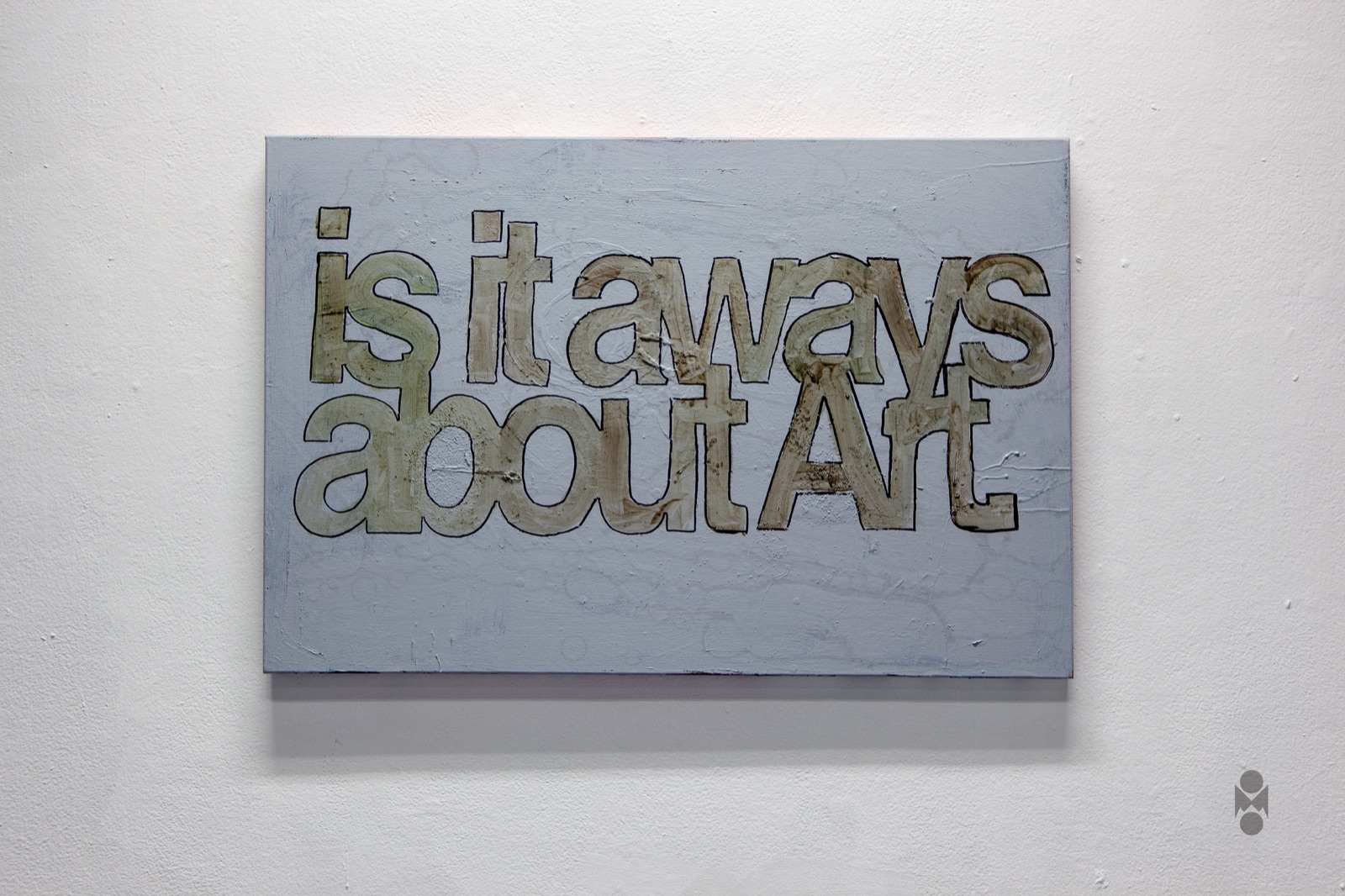
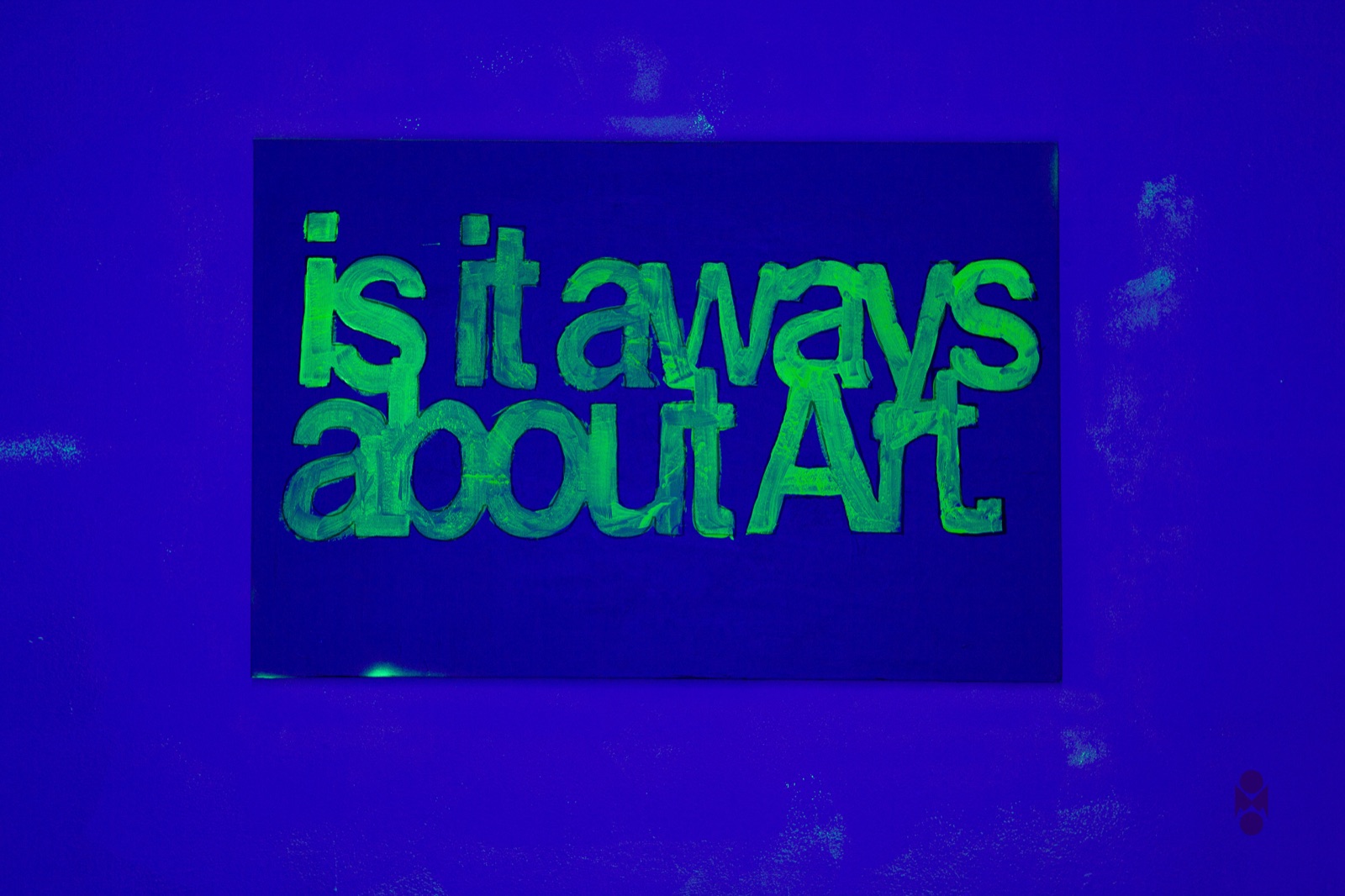
I chose the materials on purpose. Grey primer, which is what you put down before you begin and then stop. Glow in the dark spray paint. Black permanent marker. Canvas. I had heard this professor criticize these exact materials, and I picked them for that reason.
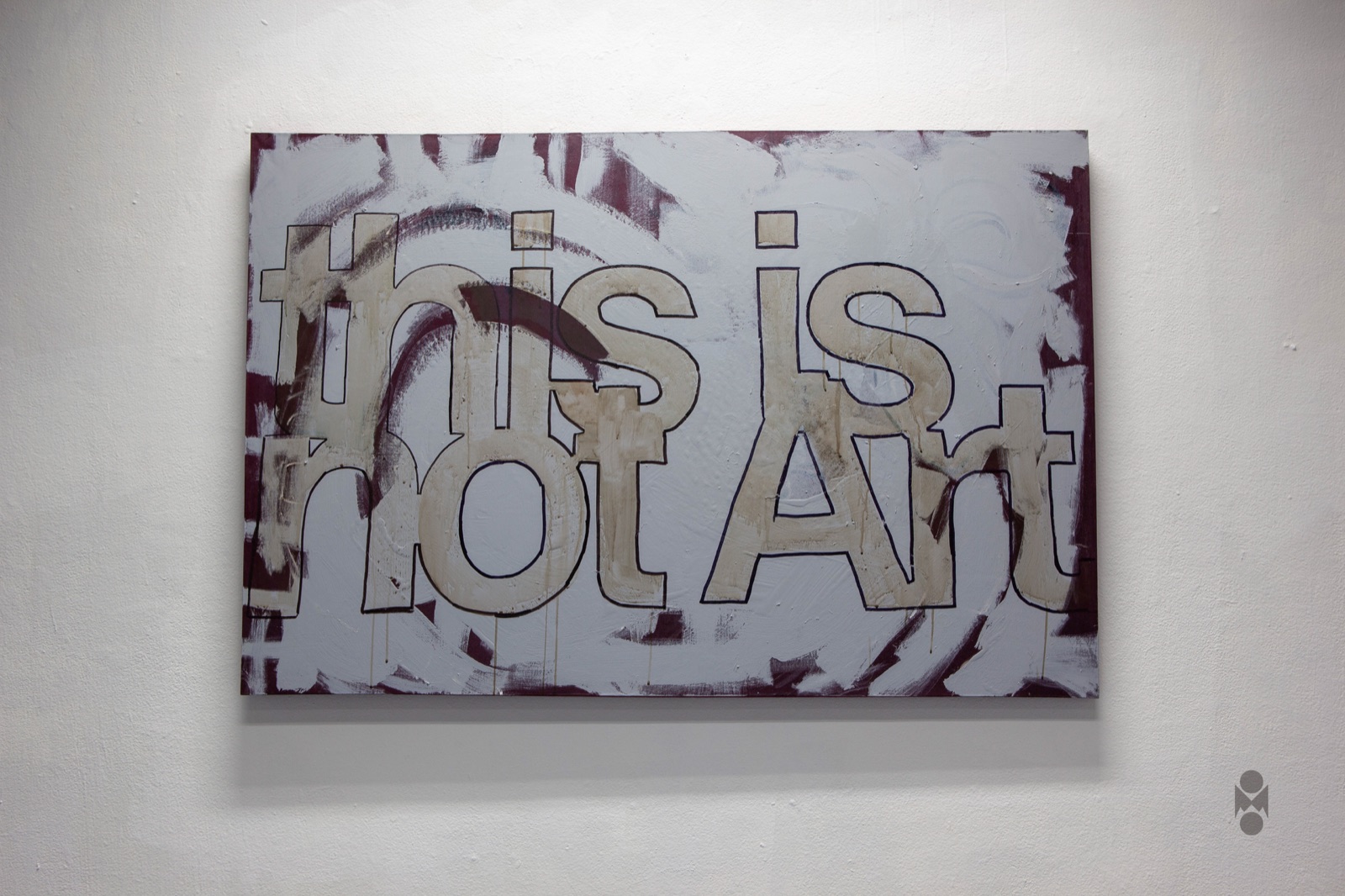
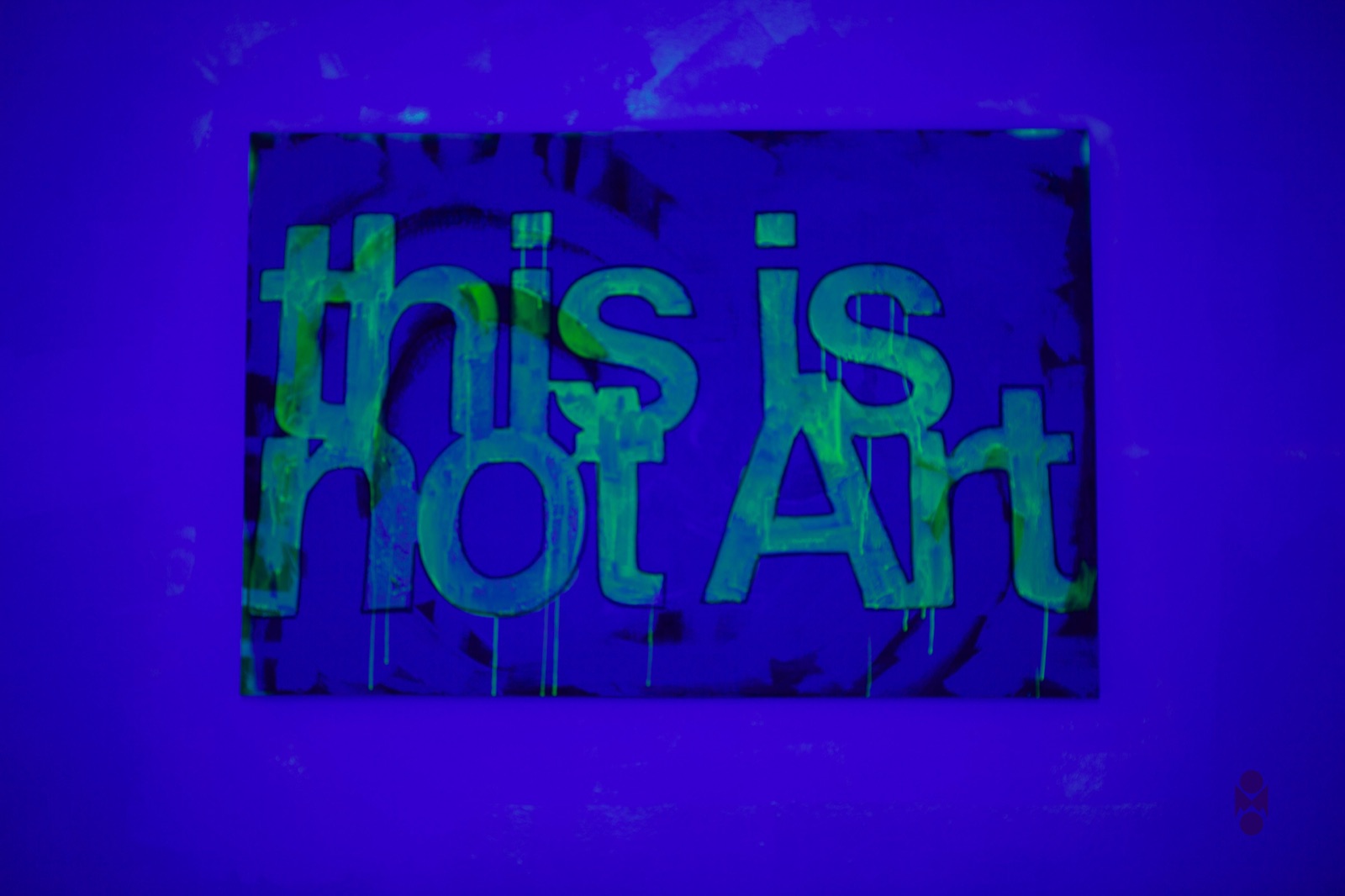
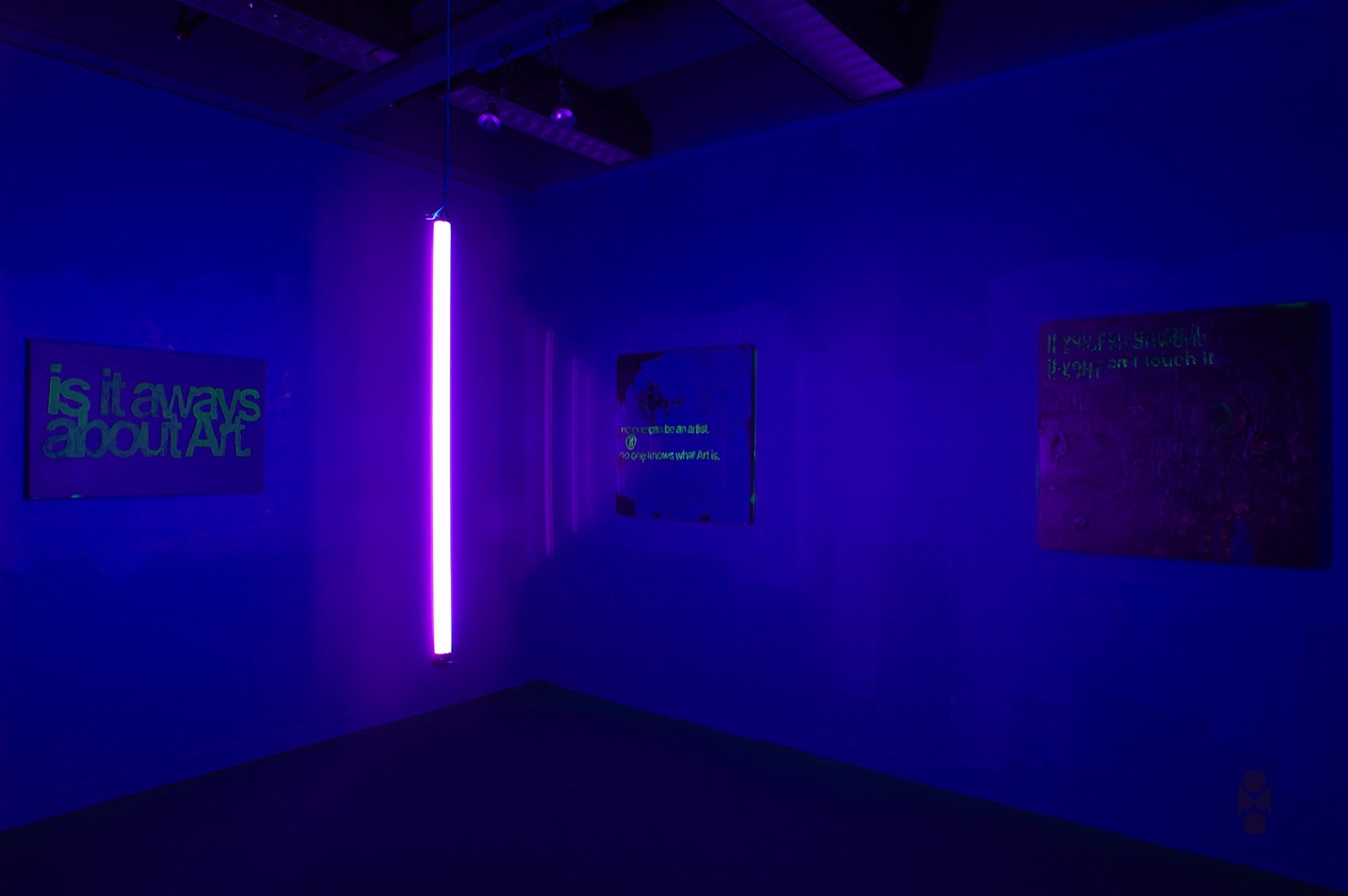
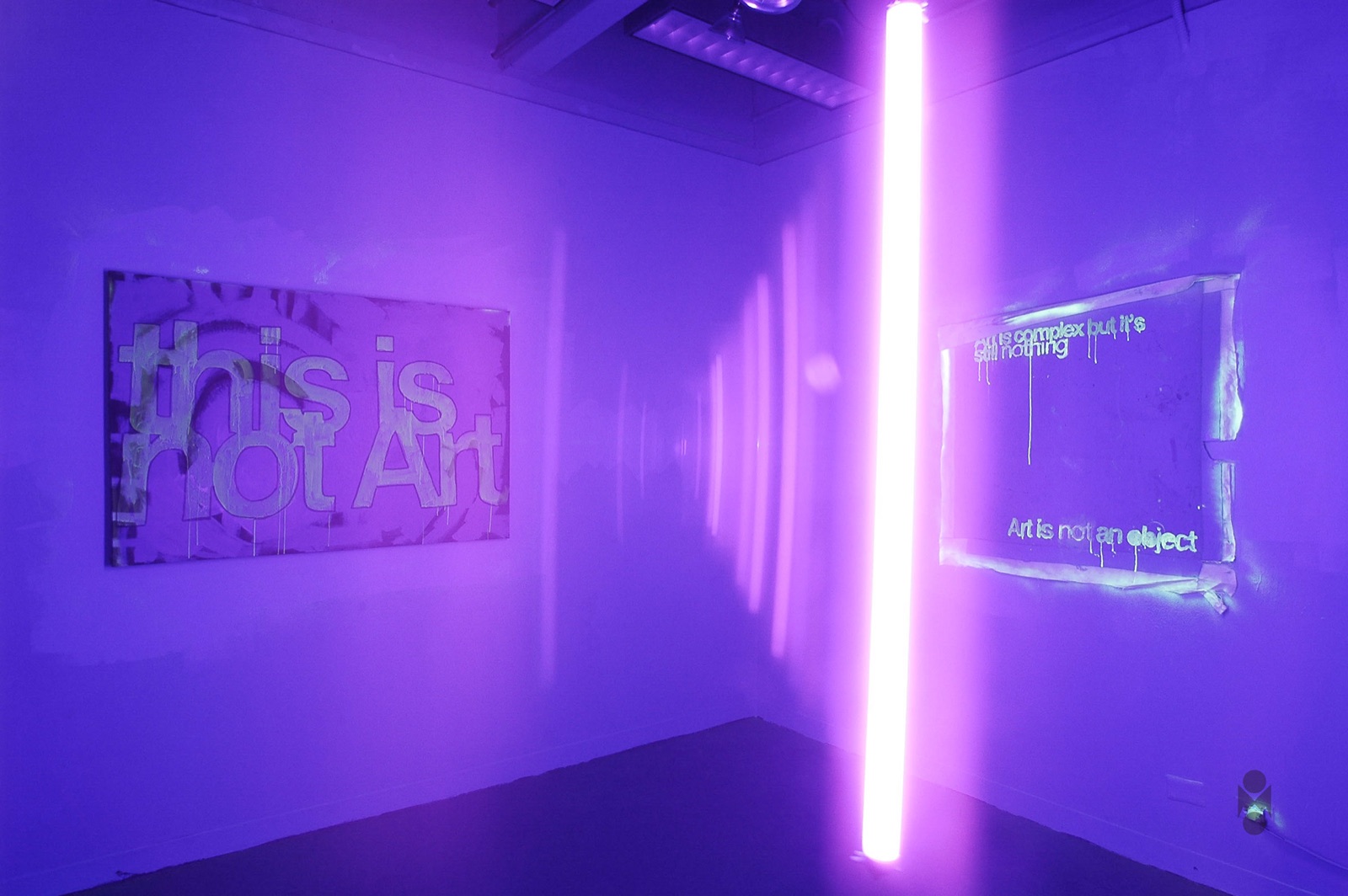
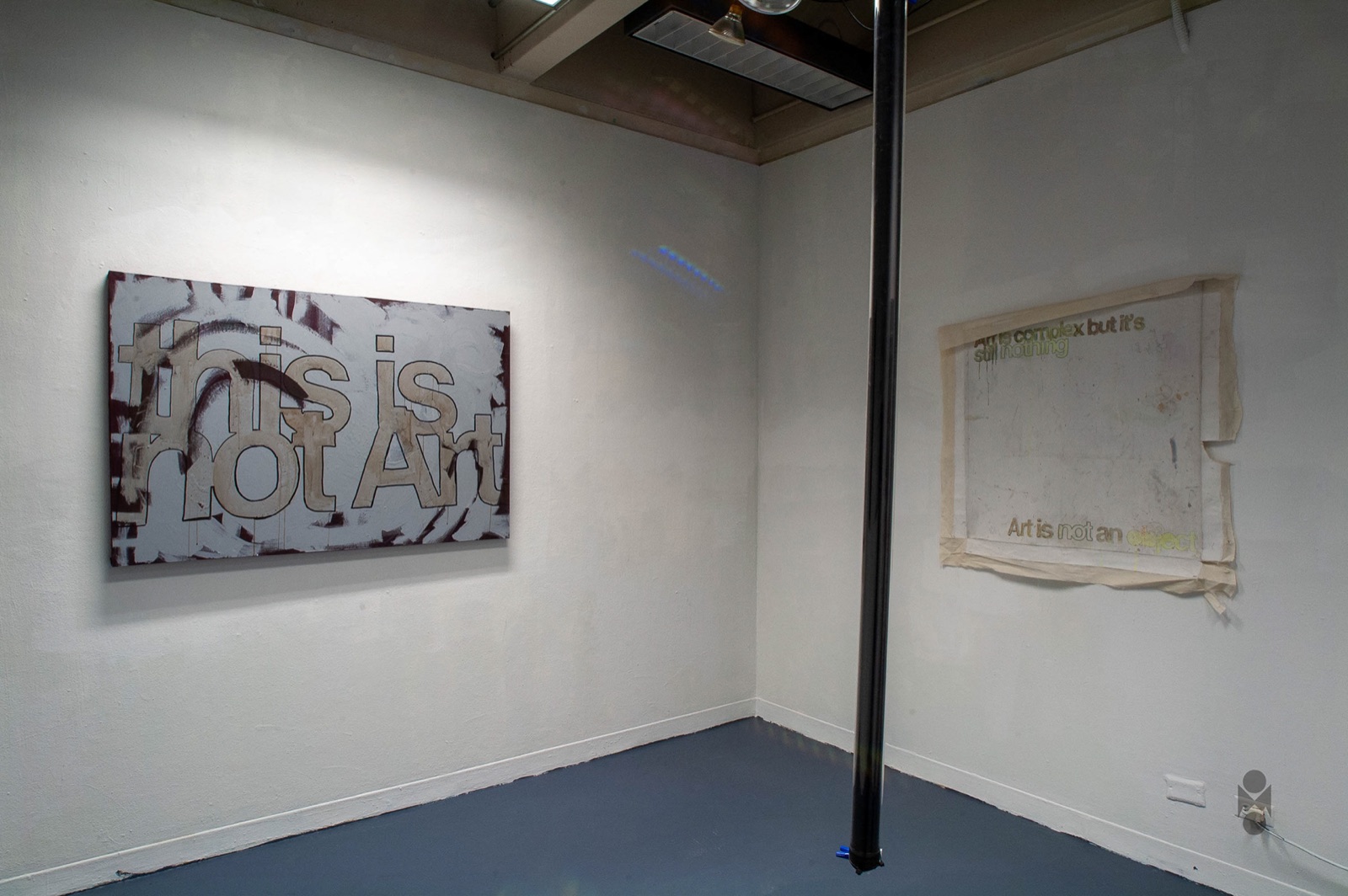
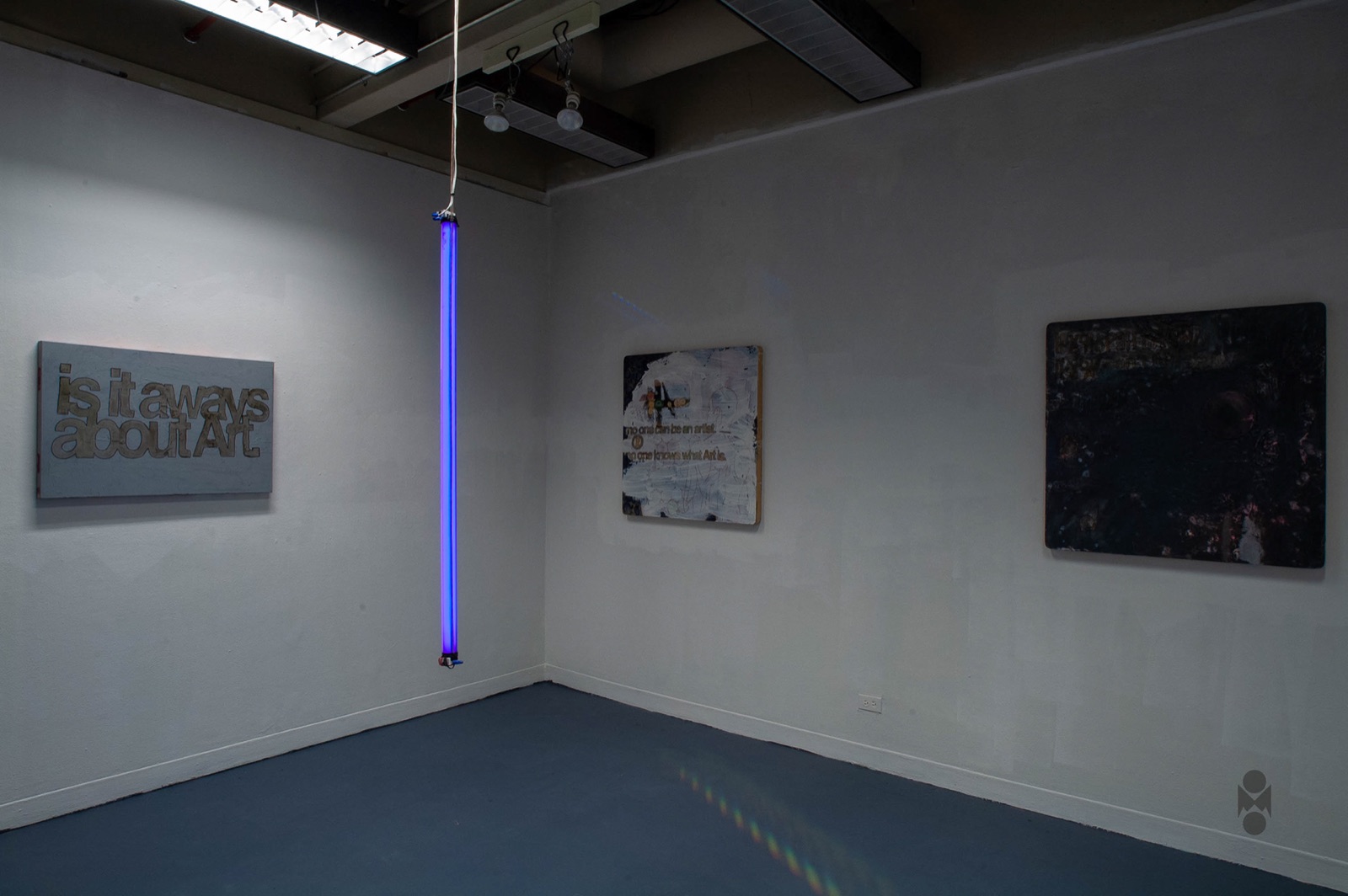
Then I wrote on them. Five canvases, five sentences, each sentence the title of the canvas it is written on. *This is not Art.* *Is it aways about Art.* *No one can be an artist if no one knows what Art is.* *If you can touch it it's not an artwork, if you can't touch it it's Art.* *Art is complex but it's still nothing. Art is not an object.*
The spelling on the second one is what is on the canvas.
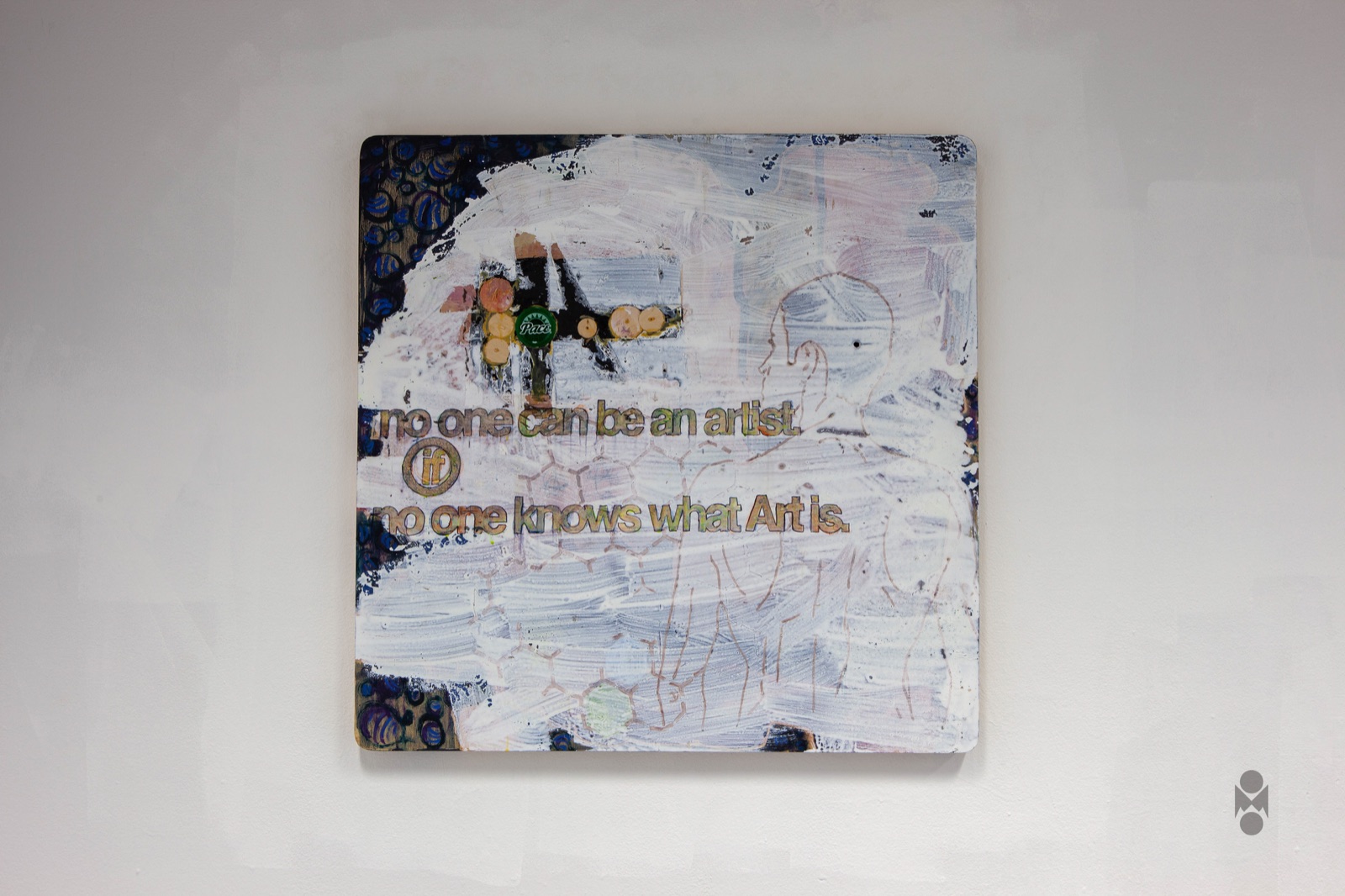
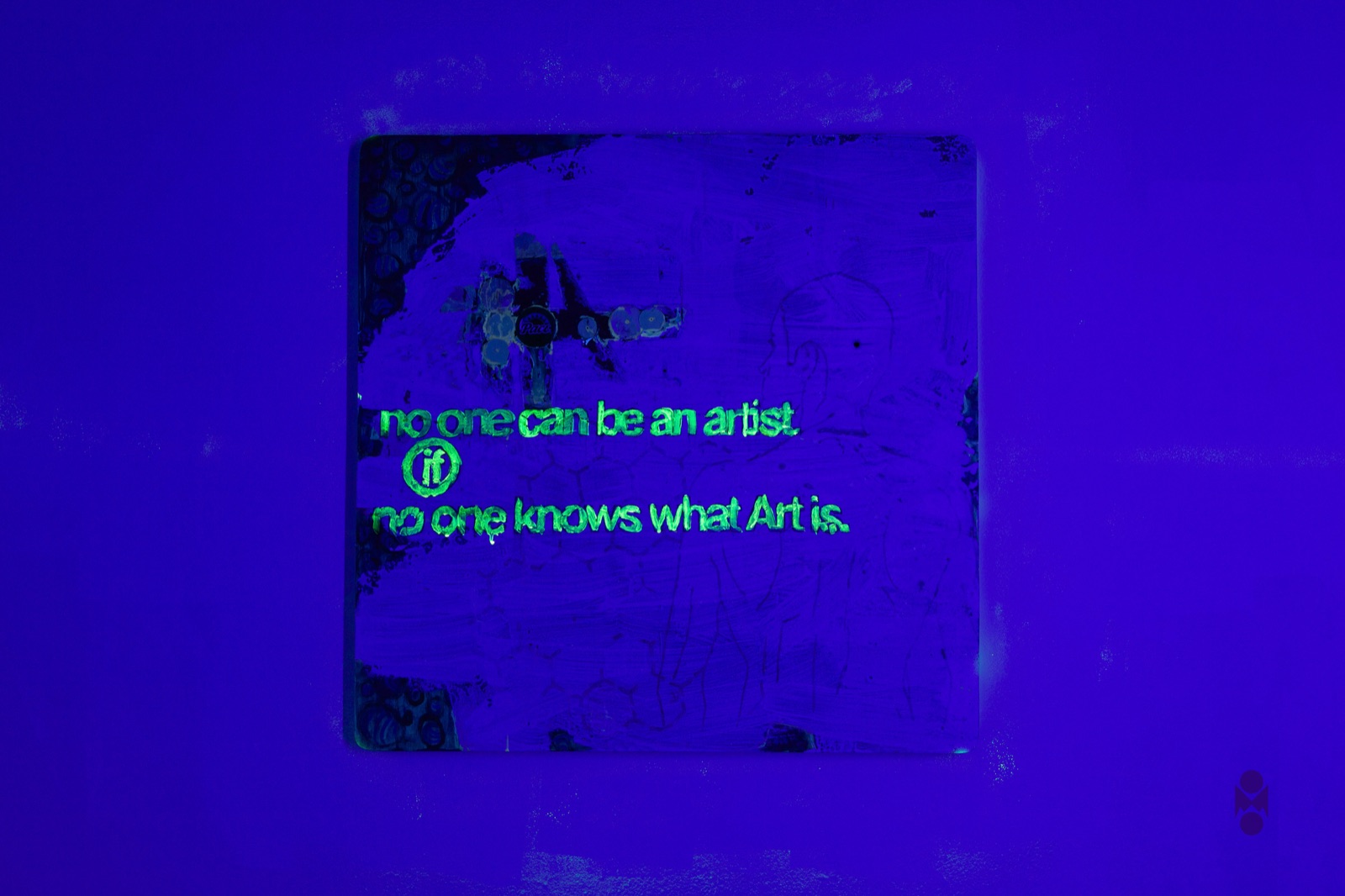
Written out they look like slogans. On the wall they are slower, because you have to decide whether you are reading a painting or reading a sentence, and the room will not let you do both at once. That was the argument I had been losing in critique, made into an object that could not be talked past.
What the light does
The lighting was the one thing I did not do out of spite, and it is the part that turned out to matter.
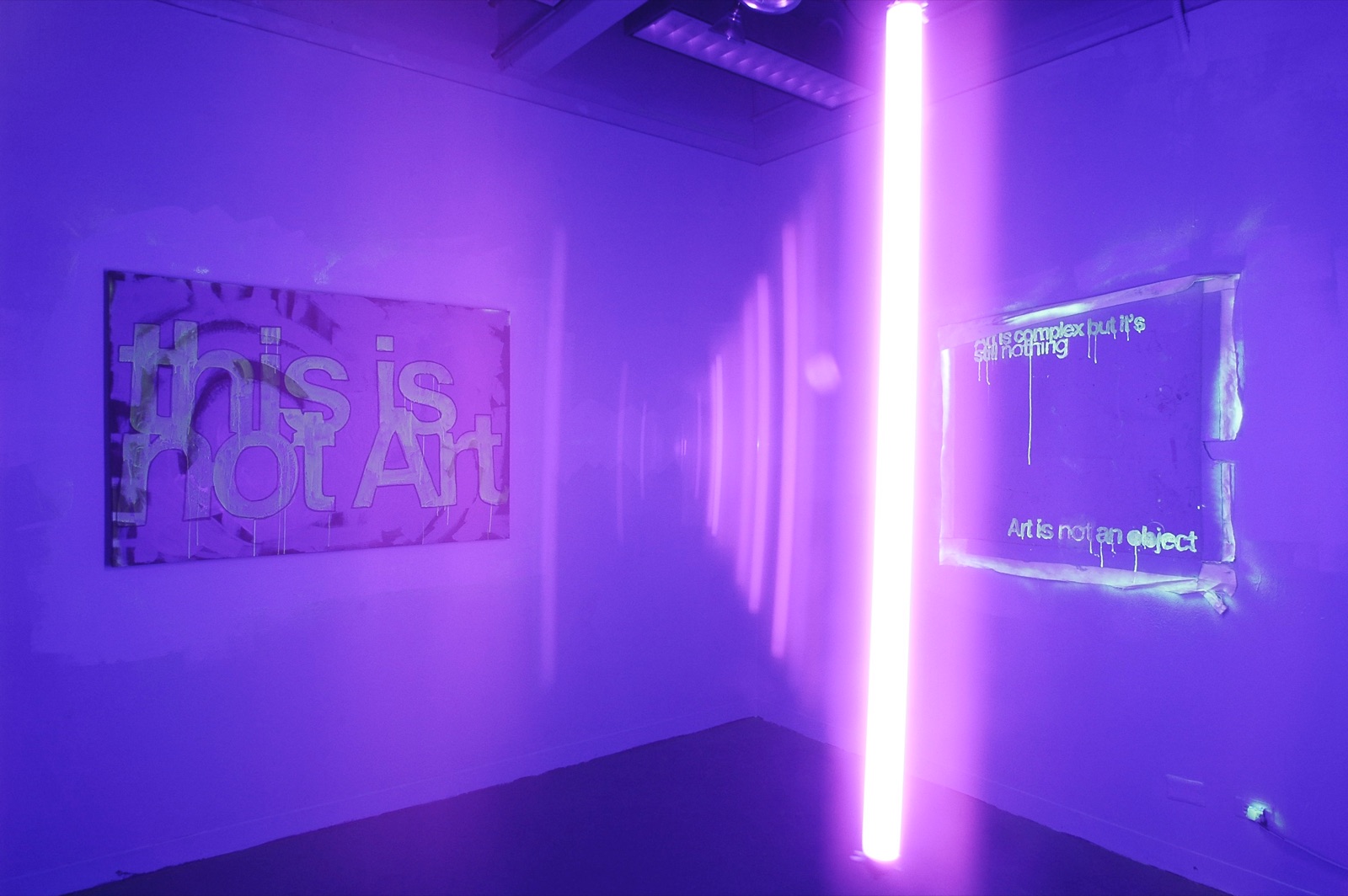
A single fluorescent black light tube hung vertically in the middle of the floor. Under ordinary light some of the canvases read as grey, scraped, nearly empty surfaces.
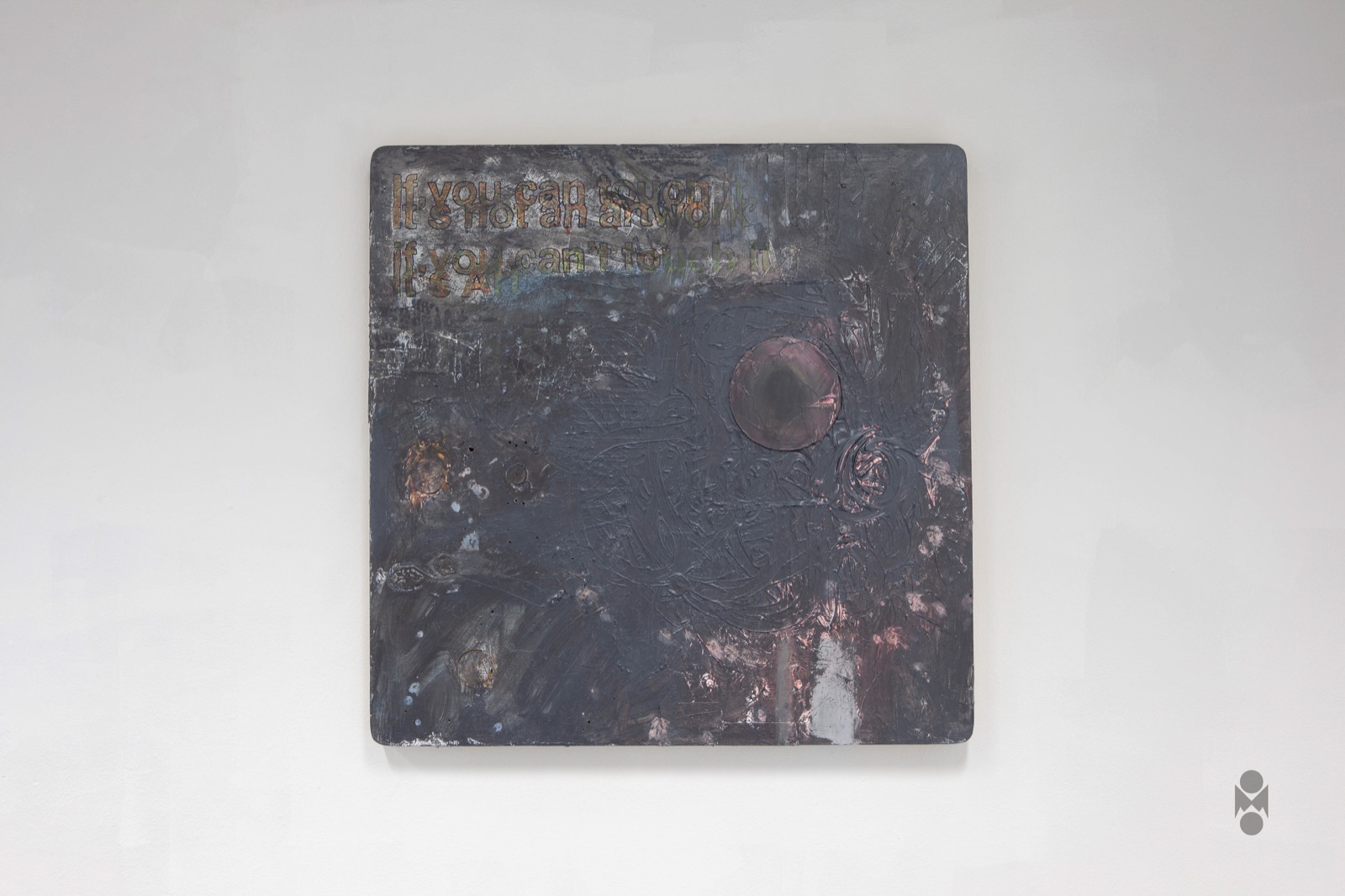
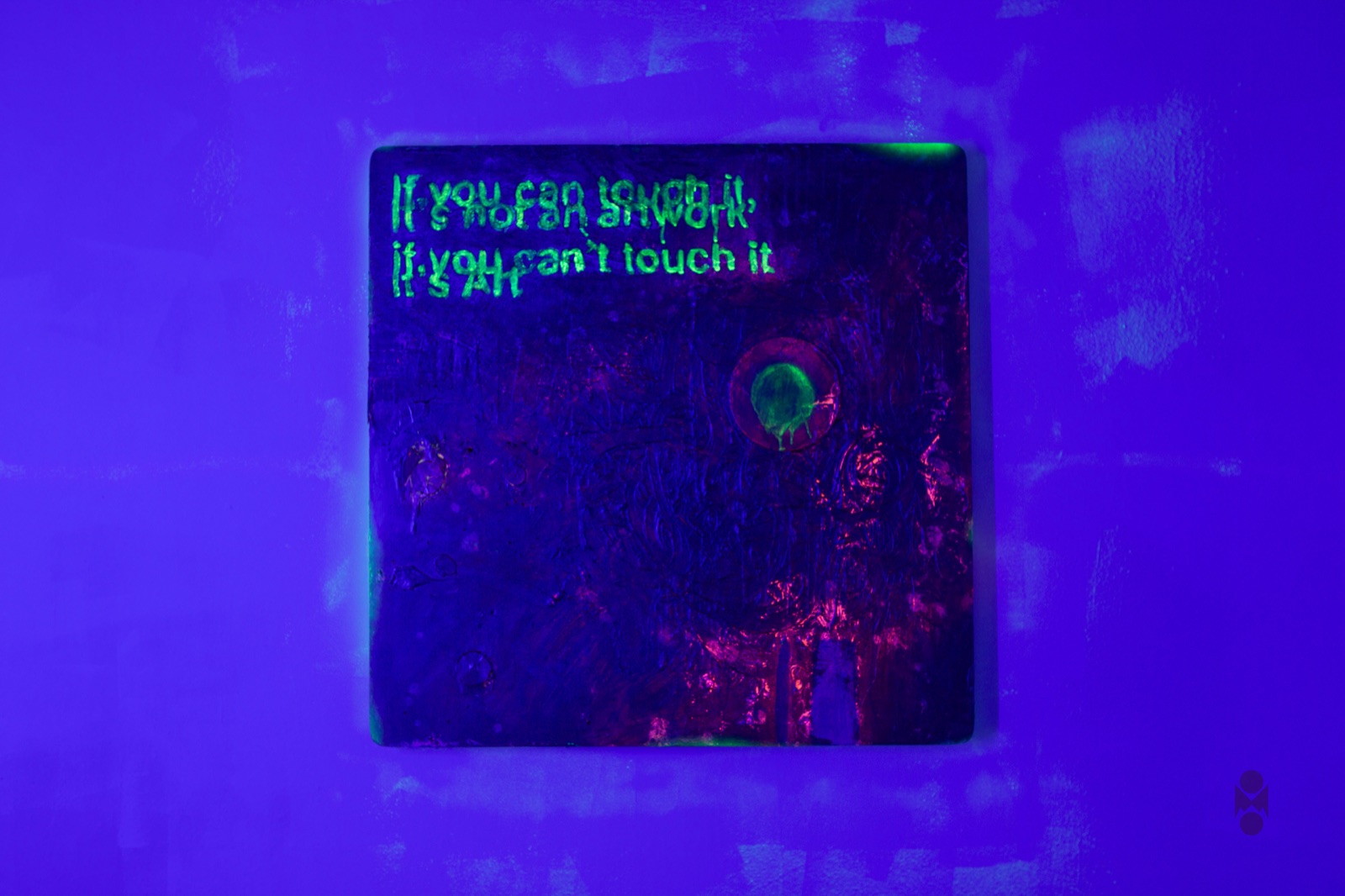
The text lives in the glow layer. What you can see depends entirely on the condition of the room, which is the claim being made about art rather than a decorative decision about paintings.
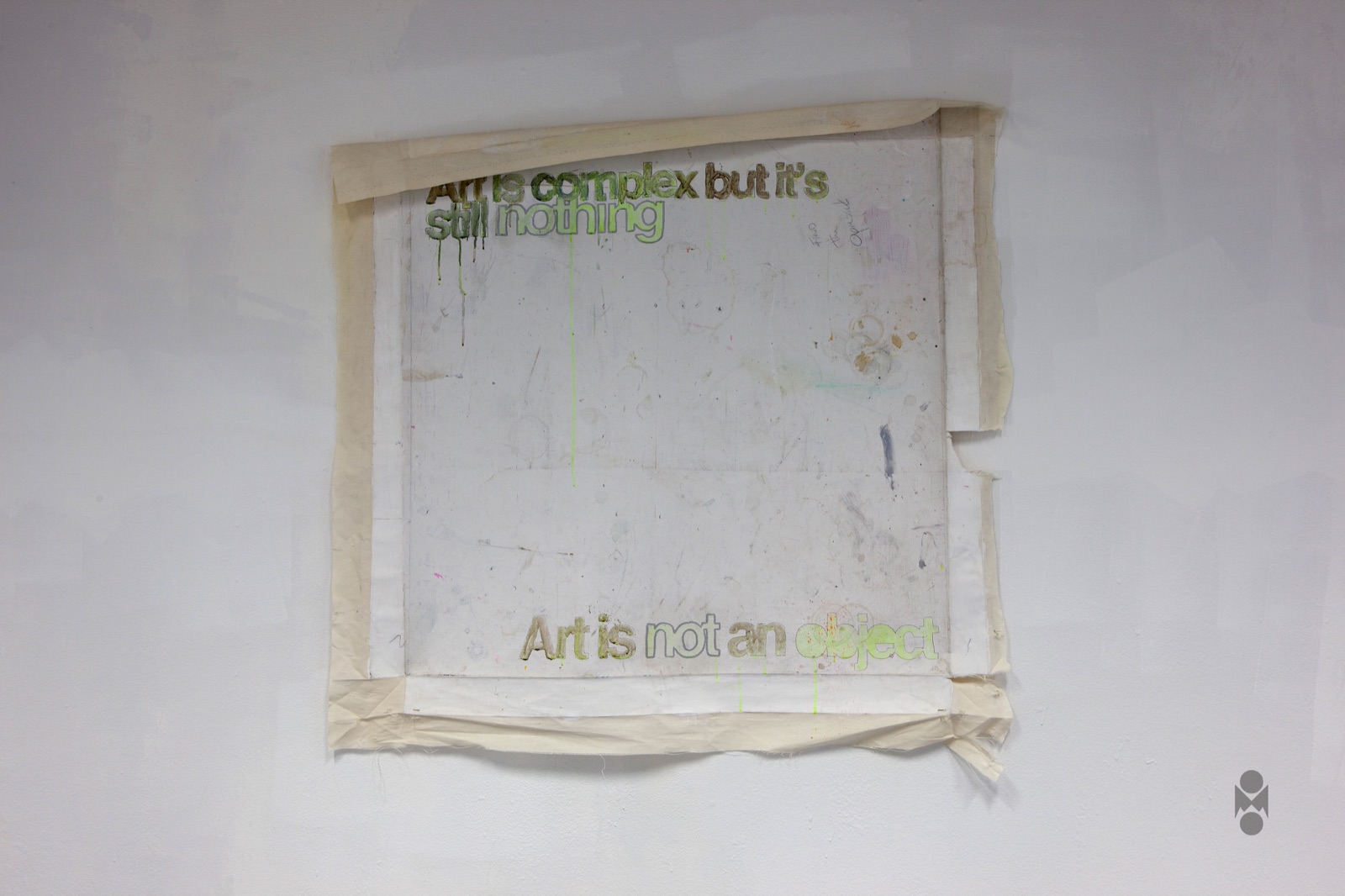
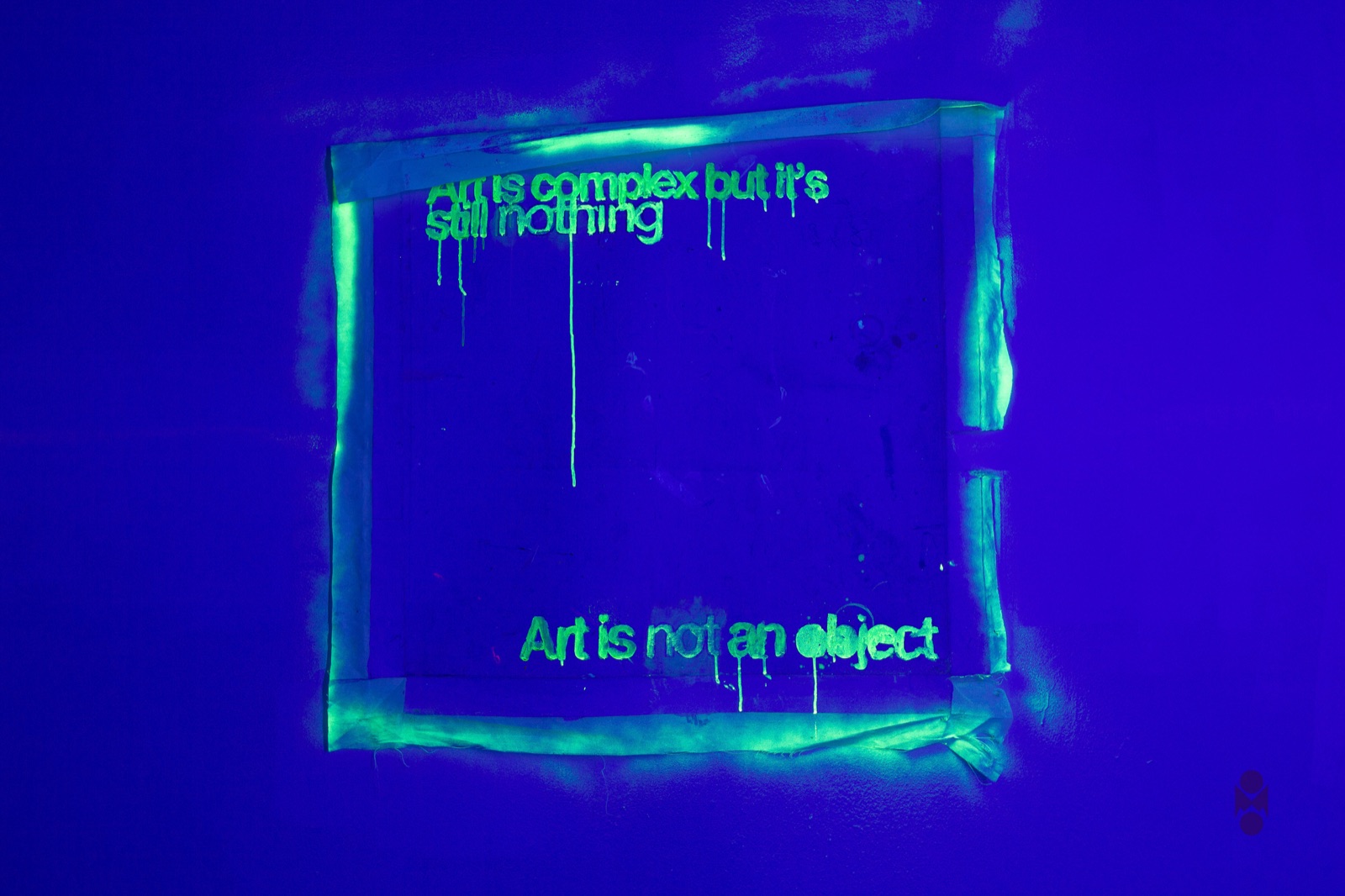
The 2010 statement, written that September, put the underlying question plainly:
Art exists only in the mind. The mind is not separate from the body; it is part of a unit. All that we are and perceive is in our mind. How can someone know for certain, this is physical or exists?
Darkness was the material, not the absence of one.
Darkness exists in the cosmos, darkness is at the edge of an idea, and we hold darkness inside.
E gallery, September 2010
I installed it in E gallery, the graduate project space, and photographed it on 10 September 2010.
Then the professor came to assess it, and the thing neither of us expected happened. We both liked it.
The work I had made to be unlikeable, in materials chosen because he disliked them, arguing a position he had rejected, turned out to be the strongest thing I had done. Being right about the argument and wrong about the object at the same time is a particular kind of education.
What it opened
Two things came out of this room and stayed: darkness as a material, and text as a form.
They run forward from here. Three months later the MFA thesis installation lit every object from inside and let the dark do the rest. The question about whether art needed to be an object, and whether it needed to be useful, is what eventually sent me to a biomedical engineering degree and through that into public commissions, where the work has a job to do in a place and nobody asks whether it counts.
In 2010 this series was called *Untitled in Darkness*. It later took the name of its loudest canvas.
Two of the five canvases are still here: *This Is Not Art* and *Art Is Complex, But It's Still Nothing. Art Is Not An Object.* The other three were stripped and their supports recycled into later work, which is ordinary practice in a studio that keeps running, and which, for a body of work arguing that the object was never the point, is the ending it asked for. What is above is the record of the room as it stood.
This article and the work are dedicated to the memory of Professor Richard "Rick" Martinez, who died in January 2020.
Grey primer, glow in the dark spray paint and black permanent marker on canvas, with fluorescent black light. Dimensions variable. E gallery, September 2010.
The record